Sunday, January 17, 2016

Links with Descriptions

This website proves to be very useful when examining the connections between Kant and Fichte. The article focuses mostly on Fichte while describing how the two philosophers inspired one another. Connections are drawn between their philosophies and how they developed over the courses of their lifetimes. The website is useful in discussing two important idealist German philosophers during the Romantic Era.

The Internet Encyclopedia of Philosophy is very useful in tracing the entirety of Immanuel Kant’s life. The website holds a copious amount of information on the life of Kant and was pertinent to discovering the essentials of Kant’s biography which includes his major works and what influenced him during his life.


This article provides an excerpt from What Is Enlightenment? This excerpt will allow you to get a taste of Immanuel Kant’s writings without interpretations or biases from others. It is well worth the read because his philosophy transcends into the modern era.

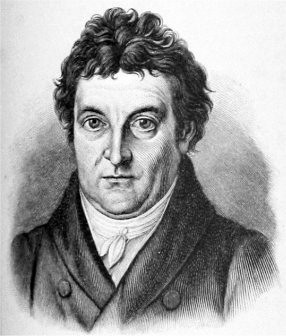
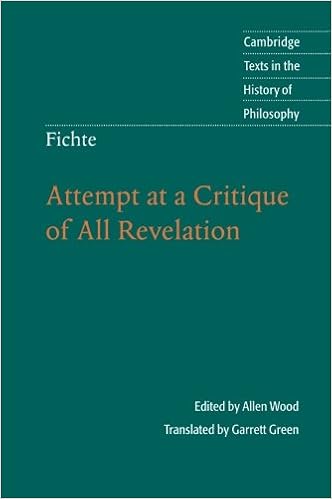
"An Attempt at a Critique of All Revelation" by Johann Fichte

An Attempt at a Critique of All Revelation was published in 1792 and was the first published work of Johann Fichte. In this work, Fichte argued the controversial opinion that any revelation in relation to God must be consistent with morality. This essay was completed in five weeks after a disappointing interview with Kant. He shut himself in his house and allotted all his energies into the composition of the essay. The book drew many connections between divine revelation and Kant’s critical philosophy. The first edition of the book was published without a name or signed preface so it was mistakenly thought to be the fourth edition in Kant’s Critical series. However Kant quickly cleared the confusion and praised the work and Fichte for the writing.

For both Kant and Fichte, religious beliefs must resolve tensions between our natural moral obligations According to Fichte, religion is naturally established by men as a way of viewing natural moral law of which we are all innately aware. Fichte also makes it clear that religion should not motivate people through fear of hell or a desire for heaven. He argues that this concept would undermine morality because people would not be acting for the sake of duty. Revealed religion also should not use deceit to shape people’s behavior such as offering burnt offers to God. This presupposed that God has desires to be satisfied and thus motivated by emotion. Both Kant and Fichte share similar views concerning religion and revelation which were controversial at the time due to the large influence of Orthodox Christianity. These two men drew inspiration and motivation from each other through both their works and personal interactions.

"The Phenomenology of Spirit" by George Hegel

The Phenomenology of Spirit written in 1807 by George Hegel marked a significant development in German idealism after Kant. the work focused on the topics of metaphysics, epistemology, physics, ethics, history, religion, perception, consciousness, and political philosophy.

The preface alone is considered one of Hegel’s major works and is a major text in the history of philosophy. His approach, referred to as the Hegelian method, consists of examining the consciousness’ experience of both itself and its objects and drawing from the experience contradictions and movement. This method is described by Hegel as “pure looking at.” He theorizes that if consciousness just pays attention to what is actually present, what once looked like stable and fixed forms dissolve into movement. Therefore, Hegel argues, philosophy cannot just set out argument based on deductive reasoning, but rather look at actual consciousness as it really exists.

Immanuel Kant's "Answering the Question: What is Enlightenment?"


Kant’s Answering the Question: What is Enlightenment? was published in 1784 and addressed the causes of a lack of enlightenment and the conditions necessary for men to enlighten themselves. In the first sentence of the essay Kant answers the question in the title: “Enlightenment is man’s emergence from his self-incurred immaturity.” He argues that immaturity is a self-inflicted impediment caused not by man’s lack of understanding but from the lack of courage to use one’s reason, intellect and wisdom. Kant describes how it is so difficult for people to work their way out of this immaturity and cowardice because we are so uncomfortable with the concept of thinking for ourselves. He even goes as far to theorize that if we did manage to throw off the dogma and formulas that we have absorbed throughout the entirety of our lives, we would still be stuck because we have never cultivated our minds and learned to think independently.

Immanuel Kant's "Critique of Judgement"

Immanuel Kant’s Critique of Judgement is the third and final book in the Critical project. In this work Kant argues that space and time are not objects but ways in which the observing subject’s mind organizes and structures the sensory world. In the Critique of Judgement Kant discusses Judgement itself which must overlap both the Understanding and Reason discussed in the previous two books.
In the first part of the book, Kant discusses the four kinds of “reflective judgements”: the agreeable, the beautiful, the sublime, and the good. The agreeable is purely sensory such as “this steak is good.” The good is ethical and is purely objective, making it the opposite of the agreeable. Kant’s analysis of the judgement
of beauty is what he calls “free play” between our cognitive powers of imagination and understanding. When an object is called beautiful, its form fits our cognitive powers and enables “free play” of our imagination. It also possesses a form of finality in which it appears to be designed with a purpose even though it does not appear to have any practical purpose. The last judgement, the sublime is beyond our limits of comprehension such as fear. Kant describes how although an object itself may not be threatening but it is recognized as deserving of fear.

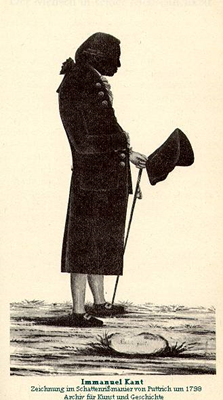
Immanuel Kant Biography

Immanuel Kant was born on April 22, 1724 in Konigsberg which since has been renamed Kaliningrad and become a part of Russia. During Kant’s lifetime Konigsberg was the capital of East Prussia and the people spoke primarily German. Although the city was geographically remote, it was a major commercial center, an important military port and a relatively cosmopolitan university town.
Kant was born into an artisan family: his father was a master harness maker and his mother was the daughter of a harness maker. Kant’s mother was better educated than most women of her social class. Although Kant’s family was never impoverished, his father’s trade was in decline during Kant’s adolescence and his parents had to rely on the support and charity of extended family several times for financial support.
While he attended a Pietist school, Kant realized his disdain for the emotional dependence on divine grace Pietism imposed onto the students. Although his parents were strought Pietists, he possessed profound respect for them due to their artisan values of hard work, honesty, cleanliness and independence.
Kant attended college at the University of Koningsberg where he studied philosophy along with mathematics and physics as well as logic, metaphysics, ethics and natural law. After college Kant spent six years tutoring young children however when his parents died, he could no longer support himself financially. He moved back home where he taught philosophy for four decades until his retirement in 1796 at the age of seventy-two.
After returning from working as a private tutor, Kant published three scientific works. His works in the following years encompassed the topics of science, metaphysics, mathematics and philosophy.
Kant was paid directly by the students who attended his lectures, so he needed to teach an enormous amount and to attract many students in order to earn a living. He would lecture an average of twenty hours per week on logic, metaphysics and ethics as well as mathematics, physics and physical geography.
After several years of relative quiet, Kant published a series of philosophical works. He argued God’s existence, discussed the material content of our moral obligations, and defined the opposition of conflicting forces. Although these works earned him notoriety, they were not strikingly original and were primarily concerned with insights from British empiricist authors. In 1766 Kant published his first work on metaphysics which became a central topic of his mature philosophy. In 1770, at the age of forty-six he was appointed the chair in logic and metaphyscis at the Albertina where he taught.
After 1770 Kant stayed steadfast on the views that sensibility and understanding are distinct powers of cognition, that space and time are subjective forms of human sensibility and that moral judgements are based on pure understand alone. He spent a decade working on the Critique of Pure Reason and published nothing else of significance for eleven years.
In 1796 Kant retired from teaching and for nearly two decades lived a highly disciplined life to focus on completing his philosophical system. His last, unpublished notes Opus Postumum, show unmistakable signs of his mental decline. He died February 12, 1804.